Sourdough Hydration: What Percentage to Use and Why
Quick Answer
Sourdough hydration determines your crumb, crust, and handling difficulty. Learn what 65%, 72%, 78%, and 85%+ hydration each produce and which to use.
Hydration is the single number that controls more about your sourdough than anything else, more than flour brand, more than proofing time, more than scoring depth. Get it right and you're pulling open crumb from the oven. Get it wrong and you've got a dense, gummy loaf that tears instead of slices.
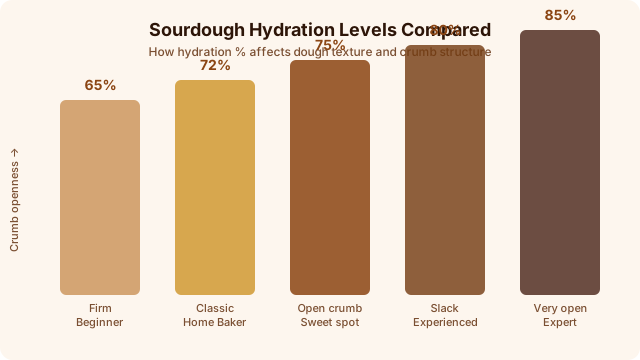
Sourdough hydration is expressed as a percentage of the flour weight. A 500g flour loaf at 75% hydration uses 375g of water. That's it. No complicated math, just water divided by flour, times 100. If you want to run the numbers for your next loaf before you commit to a hydration level, the sourdough calculator will do the division for you.
What Hydration Actually Means
Hydration sets how wet your dough is, which affects:
- Gluten network strength, wetter doughs develop gluten differently; the water molecules space out the flour proteins, making extensibility easier but structure harder to maintain
- Fermentation speed, higher hydration doughs ferment slightly faster because enzymes move more freely in a wetter environment
- Crumb structure, open, irregular holes need high hydration plus good gluten development; tight, uniform crumb comes from lower hydration
- Crust texture, wet doughs tend to produce thinner, crispier crusts; lower hydration doughs often give a chewier, thicker crust
One thing to know upfront: hydration interacts heavily with your flour. A 75% hydration dough with high-protein bread flour handles completely differently than the same percentage with all-purpose flour.
65% Hydration, The Beginner's Best Friend
At 65% hydration, dough is firm and workable. It holds its shape during shaping, doesn't stick aggressively to your hands, and is forgiving of technique mistakes.
What you get: A tighter crumb with small, fairly uniform holes. Good crust. Dense enough to slice cleanly. Flavor is still excellent, hydration doesn't affect sourness.
Who it's for: New bakers, anyone using lower-protein flour (10–11% protein), anyone baking sandwich loaves who doesn't want large holes.
Worked example: 500g bread flour, 65% hydration = 325g water, 100g starter (20%), 10g salt (2%). Total dough weight: 935g. This makes one standard 900g boule with room for oven spring weight loss.
With this hydration, you can fold the dough on the counter. No bench scraper required to manage stick. Shaping takes about 3 minutes and the dough holds tension immediately.
72–75% Hydration, The Reliable Middle Ground
This range is where most experienced home bakers live. You get a noticeably more open crumb without the handling challenges of high-hydration doughs.
What you get: Irregular crumb with a mix of small and medium holes. A wheaty, complex flavor. Crust that shatters when you tap it after baking. The loaf holds its shape well during the bake.
Who it's for: Bakers comfortable with stretch-and-fold technique, anyone using bread flour with 12–13% protein.
At 72%, you can still hand-knead if you want, though 4–5 sets of stretch-and-folds during bulk fermentation give better results. The dough is sticky but manageable with wet hands. Shaping takes practice, use a bench scraper to build surface tension.
One note on flour: King Arthur Bread Flour at 72% handles completely differently than a supermarket bread flour labeled "bread flour" at 72%. Always check protein content on the bag, not just the label.
78–80% Hydration, Open Crumb Territory
This is where you start getting those wide-open, irregular holes you see in artisan bakery loaves. It's also where technique has to be on point.
What you get: Very open crumb, thin crust, dramatic oven spring (when fermentation is right). The dough spreads more during shaping and scoring.
What changes in your process:
- Coil folds work better than stretch-and-folds, they develop gluten without degassing the dough
- You need to cold-proof overnight (8–14 hours in the fridge) to firm up the dough enough to score
- Use a well-floured banneton; at this hydration, dough will stick to anything with texture
- Score confidently and deep, hesitant scoring tears instead of cuts
Worked example at 78%: 450g bread flour + 50g whole wheat (total 500g flour), 78% hydration = 390g water, 100g starter (20%), 10g salt (2%). Total: 1000g. The whole wheat flour will absorb more water, so 78% here feels closer to 75% with straight bread flour.
If you want to try this range, use the calculate your dough tool to lock in your ratios before you mix, it's easy to overshoot water when you're pouring by feel.
85%+ Hydration, Advanced Territory
Ciabatta lives here. So do some Tartine-style loaves. At 85% and above, you're working with something closer to a very thick batter than a traditional dough.
The honest assessment: Most home bakers don't need to go here. The crumb improvement over 78–80% is marginal. The handling difficulty jumps significantly. You'll need:
- Very high-protein flour (13%+ protein) or strong Canadian bread flour
- A Dutch oven to contain the spread during baking
- Extensive lamination or coil folds during bulk to build strength
- A very cold dough for shaping (sometimes 30 minutes in the freezer before final shaping)
Some bakers add a small percentage of vital wheat gluten (1–2% of flour weight) when pushing past 80% to compensate for flour that can't build enough network on its own.
How Your Flour Changes the Equation
This is the part most hydration guides skip over. The "right" hydration number depends entirely on your flour.
| Flour Type | Protein % | Starting Hydration |
|---|---|---|
| Cake flour | 7–9% | 55–60% |
| All-purpose flour | 10–12% | 65–70% |
| Bread flour | 12–13% | 70–76% |
| High-gluten flour | 13–14% | 74–80% |
| Whole wheat | 13–14% | 75–82% (absorbs more) |
| Rye flour | 10–12% | 80–100% (absorbs a lot) |
Whole wheat and rye absorb water more slowly than white flours. If you're mixing a blend, try autolyse for 30–60 minutes before adding starter and salt, the bran soaks up water during that rest, and your dough firms up compared to what it felt like right after mixing.
Adjusting Hydration Mid-Recipe
If you're adapting a recipe from a blog that uses different flour than you have, the rough adjustment is:
- Moving from bread flour to all-purpose: reduce hydration by 3–5%
- Adding 10% whole wheat: increase hydration by 1–2%
- Adding 10% rye: increase hydration by 3–5%
These are starting points. Take notes. Baking the same formula twice with the same flour teaches you more than any guide.
What Hydration Doesn't Control
A common misconception: higher hydration makes bread sourer. It doesn't. Sourness comes from fermentation time, temperature, and your starter's bacterial balance. You can make a very sour 65% hydration loaf and a mild 80% loaf.
Also, hydration doesn't fix underfermentation. A dense, gummy crumb with big tunnels (rather than uniformly distributed holes) is almost always a fermentation issue, not a hydration issue. Check your bulk fermentation before you adjust your water.
Choosing Your Hydration
Start at 70% if you have bread flour. Mix the dough, feel how it handles, and decide next bake whether to go up or down. One percentage point at a time. Keep notes, flour changes seasonally, and what works in winter may be too wet in a humid summer kitchen.
Read our post on baker's percentages explained to understand how hydration fits into your full recipe formula, or check out the best flour for sourdough guide to match your flour to the right hydration range from the start.
Every baker I know who bakes consistently good bread has settled into a 2–3 point hydration range they return to with their specific flour. Find yours by baking, not by reading. Start with run the numbers for your loaf and get the gram weights locked before you mix.