Sourdough vs Commercial Yeast: Differences Every Baker Should Know
Quick Answer
Sourdough vs commercial yeast: fermentation time, flavor, crumb structure, and nutrition all differ significantly. Here's what actually changes and why.
Both make bread rise. That's where the similarities mostly end. Sourdough and commercial yeast produce fundamentally different breads, different flavor, different texture, different shelf life, and a very different process to get there.
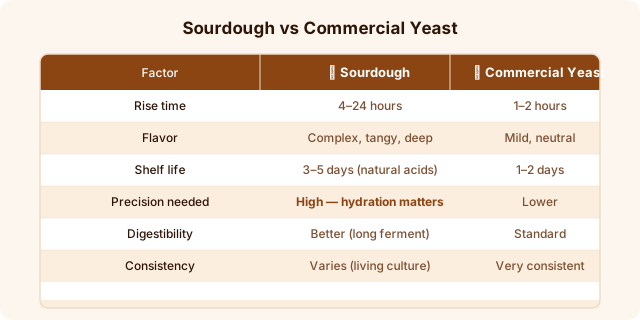
Understanding the differences helps you choose the right method for each situation, and explains why sourdough requires more precision around hydration and fermentation timing than a simple packet-of-yeast loaf.
What's Actually in Each
Commercial yeast (instant yeast, active dry yeast, fresh yeast) is a single strain: Saccharomyces cerevisiae. It was isolated in the 19th century specifically for fast, predictable leavening. A teaspoon contains billions of these yeast cells, all doing one job: eating sugars and producing CO2 to make the dough rise.
Sourdough starter is a living ecosystem. It contains dozens of wild yeast strains (often Kazachstania humilis / Candida humilis as the dominant species, plus several others) alongside lactic acid bacteria, Lactobacillus species, that produce the acids giving sourdough its flavor. The bacteria and yeast coexist in a balance that varies by flour, hydration, temperature, and how you feed your starter.
The ecosystem complexity is what makes sourdough harder to control and more interesting to work with.
Fermentation Time: Hours vs Days
A basic commercial yeast bread can go from mixing to oven in 3–4 hours. Mix, bulk rise (1–1.5 hours), shape, proof (45–60 minutes), bake. Reliable and fast.
A typical sourdough timeline:
- Starter build/peak: 4–12 hours (depending on your feeding ratio)
- Autolyse: 30–60 minutes (optional but common)
- Bulk fermentation: 4–8 hours at room temperature (or 8–16 hours cold)
- Cold proof: 8–16 hours in the fridge
- Total elapsed time: 24–36 hours, sometimes 48
That's 6–10x longer than commercial yeast. Most of that time is hands-off, but you need to be home (or at least nearby) to manage the process. This is why the sourdough baking schedule post exists, time management is a real skill in sourdough.
Flavor: Where Sourdough Pulls Away
The lactic acid bacteria in sourdough produce two acids:
- Lactic acid, mild, yogurt-like, smooth sourness. Produced more at warmer temperatures (above 24°C / 75°F) with higher hydration.
- Acetic acid, sharp, vinegary sourness. Produced more at cooler temperatures (18–21°C / 65–70°F) and lower hydration.
Fermentation time, temperature, and starter hydration control the ratio of these acids, and therefore how sour your bread tastes.
Commercial yeast bread has none of this complexity. It tastes like flour, fat (if any), and yeast, a pleasant, clean flavor that doesn't develop the complexity of even a mild sourdough.
This is why bakery sourdough sold at supermarkets often isn't real sourdough. Check the ingredient list, if it contains vinegar or citric acid and rapid-rise yeast, it's flavored commercial bread. Real sourdough uses nothing but flour, water, salt, and starter.
Crumb Structure
Commercial yeast produces a uniform, even crumb. Every cell in the dough ferments at roughly the same rate, producing consistent CO2 distribution. The result is soft, even holes throughout, great for sandwich bread.
Sourdough crumb is more variable and depends heavily on hydration. A 65% hydration sourdough has a tighter, chewier crumb than a commercial loaf at similar hydration. A well-made 78% sourdough has large, irregular holes that commercial yeast can't replicate.
Why? The long fermentation in sourdough develops more gluten network strength, even without kneading. The acids also modify the gluten structure, making it more extensible (able to stretch without tearing), which allows gas bubbles to expand into larger holes.
This is also why hydration precision matters more in sourdough. At 72% hydration, a commercial yeast dough is easy to handle. At 72% hydration, a sourdough needs careful technique because the extended fermentation makes the dough progressively more extensible over time.
Nutrition and Digestibility
Long fermentation changes the nutritional profile of bread in ways that commercial yeast doesn't replicate.
Phytic acid reduction: Wheat contains phytic acid, which binds minerals like iron, zinc, and magnesium and prevents absorption. During sourdough's extended fermentation, phytase enzymes break down phytic acid by roughly 50–70% (compared to a commercial yeast loaf's 15–20%). More of the bread's minerals become bioavailable.
Gluten pre-digestion: Sourdough bacteria and the acidic environment partially break down gluten proteins during fermentation. Many people with non-celiac gluten sensitivity report tolerating sourdough better than commercial bread. This is not the same as celiac disease, sourdough is not safe for celiacs, but the difference is real for a subset of people with gluten discomfort.
Glycemic index: Real sourdough typically has a lower glycemic index than commercial bread because the acetic acid slows the absorption of sugars. Commercial white bread has a GI around 75; sourdough white bread typically lands at 53–54 in studies.
These benefits require genuine long fermentation. Quick sourdough cheats (sourdough flavoring, short ferments) don't produce the same biochemistry.
Shelf Life
A properly baked sourdough loaf stays good for 4–5 days at room temperature stored cut-side down on a wooden board or wrapped loosely in a cloth bag. The lactic acid acts as a natural preservative, inhibiting the mold that attacks commercial bread within 2–3 days.
Commercial supermarket bread often contains added preservatives (calcium propionate) to extend shelf life artificially. Without those, a commercial yeast loaf goes stale and molds faster than sourdough.
When Commercial Yeast Makes More Sense
Sourdough is not always the right tool.
- Time constraints: If you need bread in 4 hours, commercial yeast is the answer.
- Enriched doughs: Brioche, challah, cinnamon rolls, these use eggs, butter, and sugar. Commercial yeast handles enriched doughs more reliably. Sourdough works in enriched doughs, but the long fermentation can break down the structure.
- Pizza in a hurry: A 48-hour cold-fermented commercial yeast pizza dough is excellent and much faster to manage than sourdough pizza.
- Reproducibility without a scale: Commercial yeast by the packet is more forgiving of imprecise measuring. Sourdough requires a scale and baker's percentage precision, especially at higher hydrations.
Where Hydration Precision Matters More in Sourdough
This is the practical difference most people underestimate. With commercial yeast at 72% hydration, the dough is somewhat forgiving, it won't change dramatically over 2 hours of bulk fermentation.
With sourdough at 72% hydration, the dough changes significantly over 5–6 hours. As bulk progresses, the acids relax the gluten and the dough becomes more extensible and wetter-feeling. By the end of bulk, a 72% sourdough dough behaves more like a 78% commercial yeast dough.
This means you have to work with the dough where it is, not where it started. And it means getting the hydration right from the start matters, too wet and the dough loses structure before you can shape it. The sourdough calculator helps you nail the initial formula so you're not overcorrecting mid-bake.
A Quick Comparison
| Factor | Sourdough | Commercial Yeast |
|---|---|---|
| Total time | 24–48 hours | 3–5 hours |
| Flavor | Complex, acidic | Clean, mild |
| Crumb | Irregular, open (with technique) | Uniform, even |
| Shelf life | 4–5 days | 2–3 days |
| Phytic acid reduction | 50–70% | 15–20% |
| Skill required | High | Low–medium |
| Equipment needed | Scale, Dutch oven, banneton | Bowl, loaf pan |
| Hydration precision | High importance | Medium importance |
Neither is objectively better. They're different tools.
Related reading:
- Sourdough Starter Feeding Ratios, understanding your starter's timing is the key to controlling sourdough fermentation
- Common Sourdough Mistakes, most mistakes come down to fermentation timing, not technique
- Calculate your dough ratios before your next bake